ARIAM Researcher Development Workshop

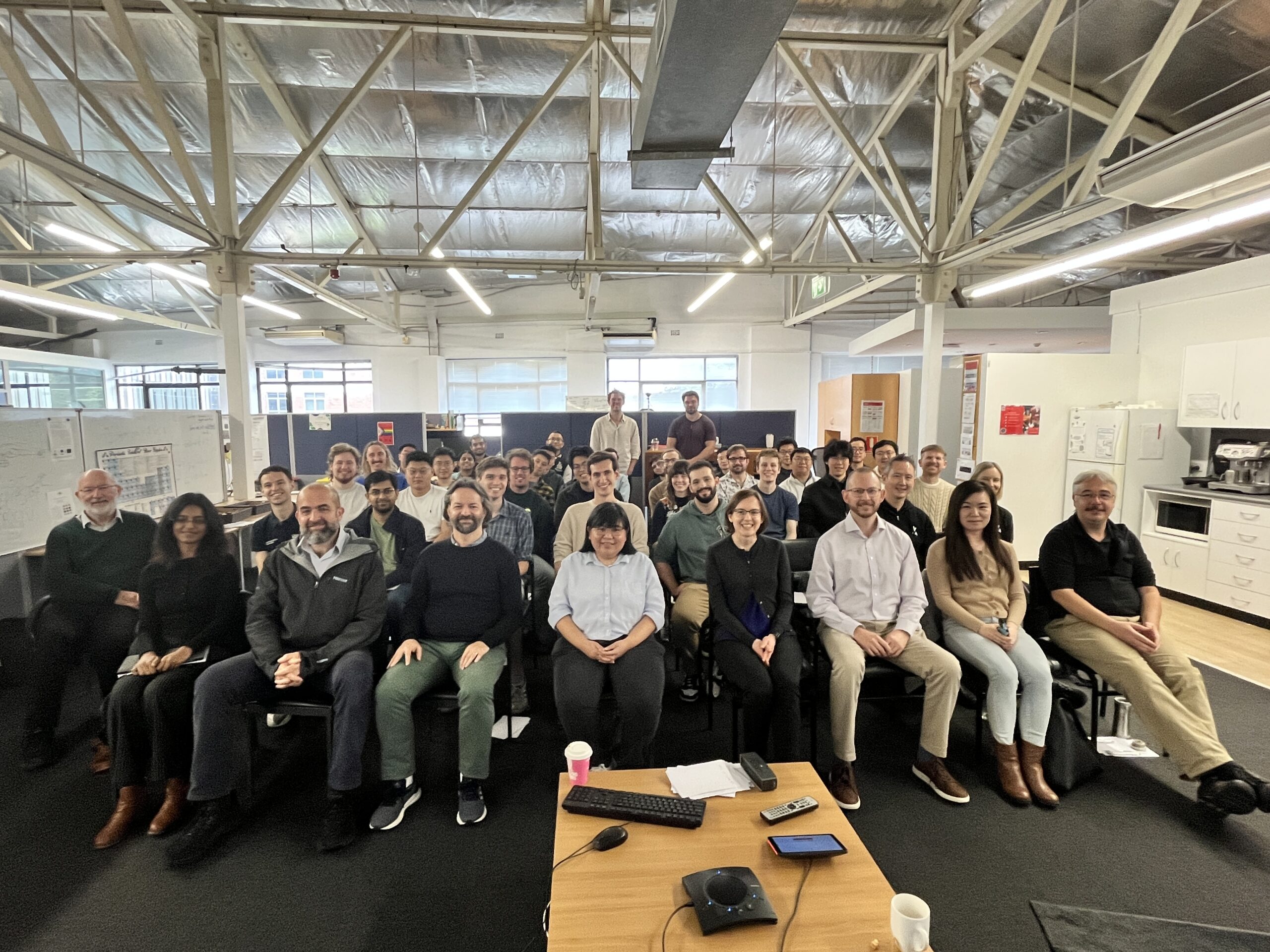
The ARIAM Research Hub hosted our Researcher Development Workshop on May 9th for the research cohort within ARIAM Research Hub and the Australian Centre for Robotics (ACFR). The event brough together experts from across Australia’s robotics and tech community to inspire and equip the next generation of academic researchers and industry leaders.

Co-organised by Donald Dansereau, Gideon Billings, and the ARIAM Management Team, the day featured two standout keynotes:

  • Samson Lee (Visionary Machines) shared his entrepreneurial journey from PhD student to startup founder—complete with a 16-camera rigged family car.
  • Dana Kulic (Monash University) delivered a keynote titled “A Serendipitous Sequence of Meeting Amazing People Who Let Me Hang Out With Them and Opened Doors I Never Knew Existed.”  Her global career journey highlighted the power of mentorship and the courage to seize unexpected opportunities. 

The day included four panel discussions and workshops including Understanding Research Impact, Post-PhD Pathways, Collaboration and Networking Workshop, and a strategic research development workshop. With insights from ARIAM academics as well as guests from Monash, UTS and industry leaders from amongst our partners and CSIRO. The day was a powerful reminder to never stop learning!


ARIAM Hub Supporting Innovative Hull Repair Project on MV Cape Don 

Sydney Harbour, April 2025 

The Australian Robotics Inspection Asset Management (ARIAM) Hub is partnering with the Sea Heritage Foundation on an innovative hull repair project for the historic former lighthouse tender MV Cape Don, combining advanced AI robotics with traditional maritime engineering. 

The project marks a significant step in the preservation of Australia’s maritime heritage while also contributing to national innovation in naval inspection and repair technologies. Following the successful decontamination and removal of hydrocarbons from the vessel, work has now commenced on assessing and planning critical external repairs along the ship’s wind and water line. 

While the MV Cape Don remains structurally sound internally due to earlier restoration works overseen by Thales and naval architects at the Garden Island Dry Dock, the long-term preservation of the vessel depends on addressing wear and degradation to the outer hull. These repairs are crucial in securing the ship’s future as a living maritime museum and training platform. 

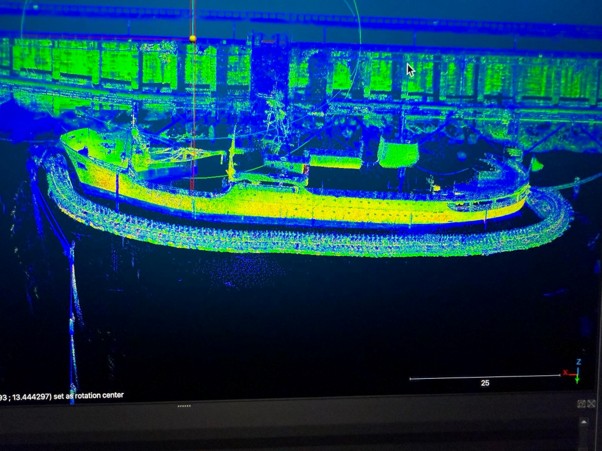
To support this work, ARIAM Hub researchers, in collaboration with experts from Queensland University of Technology (QUT), have deployed advanced drone‑based scanning and mapping technologies to undertake a detailed digital survey of the vessel. Using high‑resolution sensors, the team captured precise 3D scans of the external hull and selected internal compartments. 

The scans aid in creating digital models which will form the foundation for engineers and naval architects to develop a comprehensive, fit for purpose scope of works. Specialist contractors will then use this data to design and implement targeted repair solutions, ensuring accuracy, safety, and efficiency throughout the restoration process. 

The project reflects a best‑practice approach to asset inspection and management, emphasising expert consultation, rigorous safety standards, and transparent collaboration with local and state government authorities. Importantly, the data generated through ARIAM’s work will also contribute to ongoing national research efforts, supporting future advancements in naval ship battle damage assessment and repair technologies. 

Sea Heritage Foundation Chairman Dr CJ Manjarres‑Wahlberg said the project demonstrated the powerful intersection of heritage preservation and modern technology. 

“This project is an extraordinary example of how a heritage preservation project and modern technology can come together to create lasting benefits,” Dr Manjarres‑Wahlberg said. “It’s 1960s technology and state‑of‑the‑art AI working hand in hand. We are not just restoring a ship; we are actively contributing to helping future‑proof Royal Australian Navy vessels through the work we are involved in.” 

Thanks for the ongoing support of North Sydney Council, the ARIAM Hub, NSW Maritime, the Port Authority of NSW, Thales Australia, and Gibson Minto in enabling this project. 

We are pleased to support a project that demonstrates how heritage preservation and modern AI robotics can work hand in hand to deliver lasting impact. 


Researcher Interview – SPOTlight

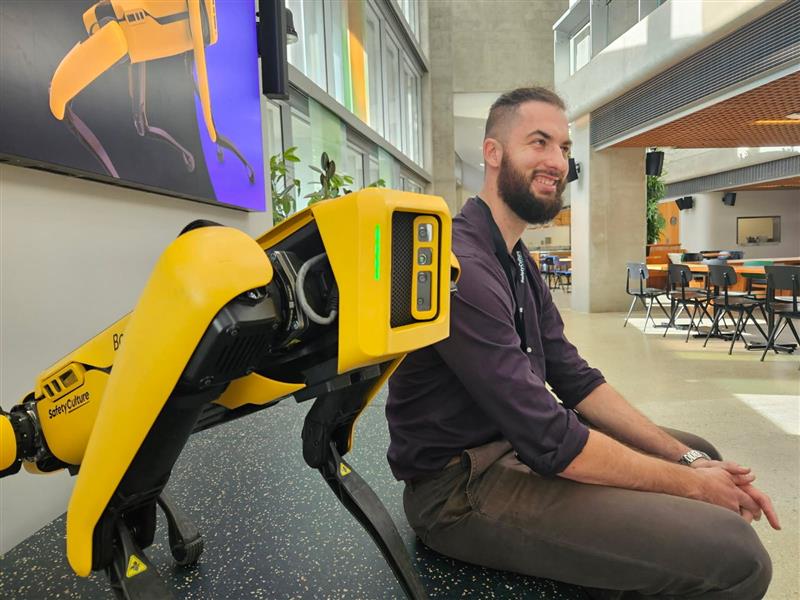
On the back of their recent win of the Boston Dynamics SPOT robot, we interviewed PhD researchers Michael Somerfield and Bina Rajan about their plans for the quadruple robot, including how they will modify its capabilities to enhance their workflows.

How do you see Spot aligning with your current academic research goals?

Michael: My research is directly in the field of Legged Robotics, so the spot allows me to test my research on a world-class platform.

Bina: My work is oriented around understanding the behaviour of camera blur on moving platforms. it would be interesting to understand this behaviour on a quadrupedal platform like spot.

What tasks or experiments do you envision Spot performing in your research?

Michael: I would like to test out climbing over and around complex obstacles, where you need to consider not only the shape of the object, but also the order in which you take your steps, similar a rock-climber ensuring they don’t get stuck in a position that can’t get out of.

Bina: I would like to test in low-light conditions where the camera is subject to motion due to impact from the footsteps and understand the blur types and challenges of imaging in low light.

What role will spot play in the ARIAM Hub and ACFR?

Michael & Bina: Before we got the spot, we didn’t have a quadrupedal platform, so didn’t have access to a robot that could climb stairs and operate in confined/indoor spaces. We also didn’t have a platform that was off-the shelf with so much functionality tailored towards both research and application. The spot is a platform that we can simply start up send out for inspections, but also just interface with to test out our low-level research ideas.

Do you plan to modify or enhance Spot’s functionality?

Michael & Bina: We are keen to combine & utilise the various sensor suites that we have used around the ACFR to test out various multi-modal data collection techniques for inspections, SLAM, 3D image reconstructions and whatever other crazy ideas we can come up with.


ARIAM PhD’s win Boston Dynamics SPOT Robot!

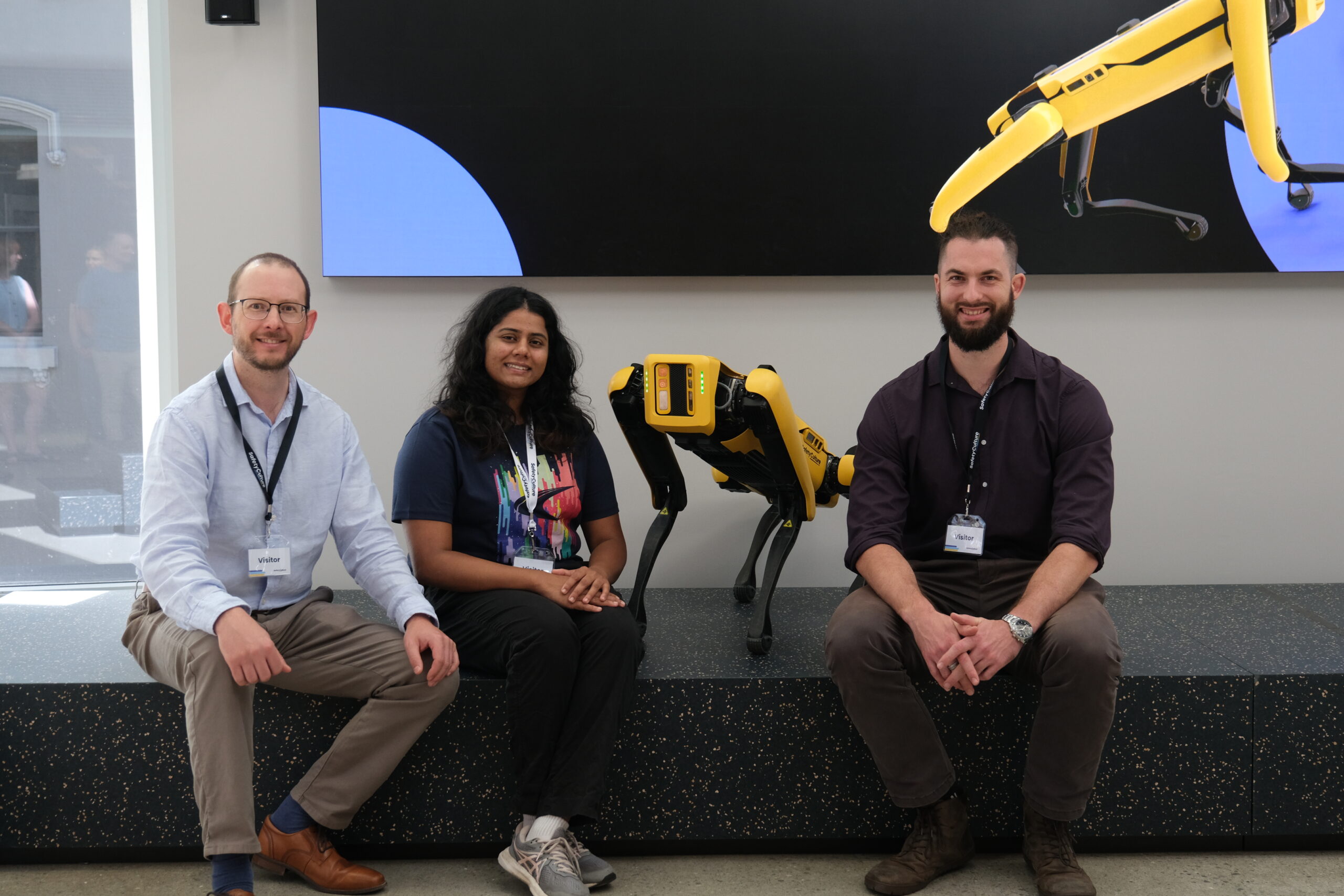
At the end of 2024, ARIAM PhD researchers Michael Somerfield and Bina Rajan created the winning submission to the SafetyCulture Innovation Challenge. The competition invited university students and professional engineers to unleash their inner innovator for a chance to win a share of $5,000 in prizes, plus a Boston Dynamics Spot robot. Using the decommissioned Cape Don lighthouse vessel as a backdrop, Michael and Bina’s submission demonstrated an innovative idea for how Spot could revolutionise shipping inspection; boosting efficiency, safety, and productivity in a work environment. On March 19, the SafetyCulture team invited the winners to collect the robot in person and to tour their amazing offices in Surry Hills.

As the first off the shelf quadrupedal platform our Hub has acquired, our researchers plan to combine and utilise various sensor suites to test multi-modal data collection techniques for inspection, SLAM, 3d image reconstructions and many other ideas yet to be discovered.


ARIAM Chief Investigator Awarded NVIDIA Academic Grant

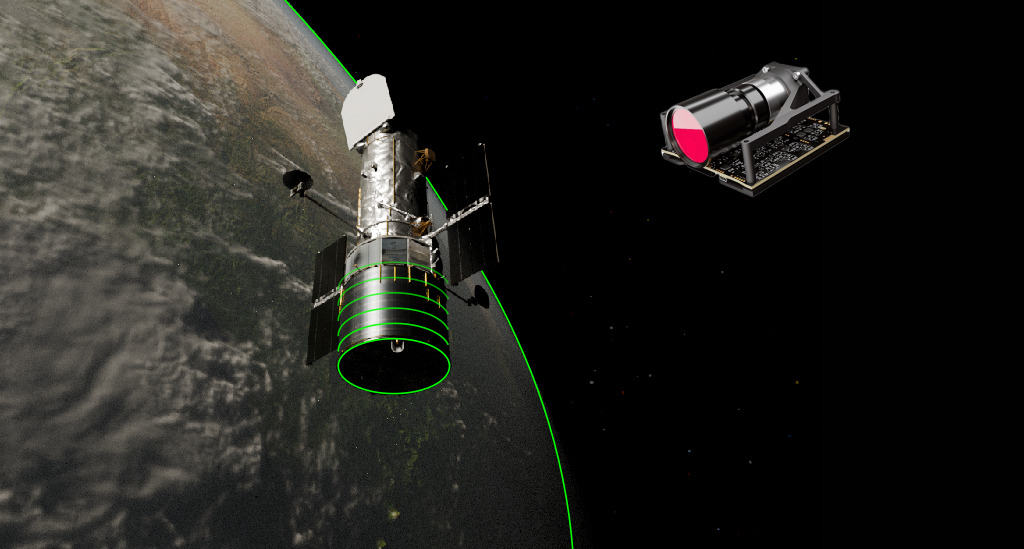
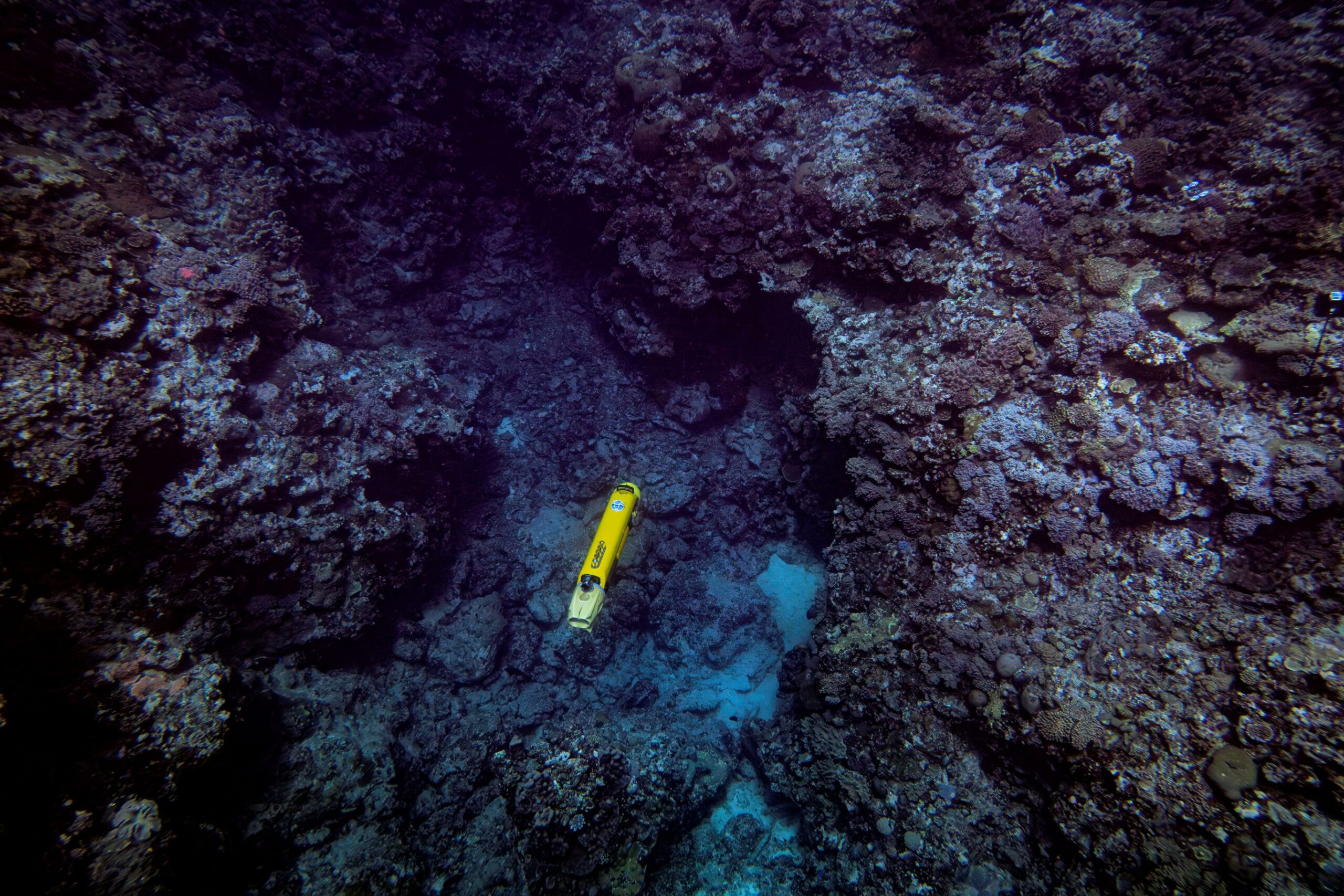
Congratulations to ARIAM Chief Investigator, Dr. Donald Dansereau on the successful award of a NVIDIA Academic Grant to support his research project on Physics-Based Simulation for Robotic Vision in Extreme Environments. This research explores the use of physics-based simulations to design advanced imaging systems for robotic vision in extreme environments such as space and underwater. By leveraging NVIDIA‘s cutting-edge ray-tracing and deep learning platforms, the project aims to develop new kinds of sensors for challenging tasks like satellite inspection and underwater mapping. This innovative work has the potential to enhance robotic performance in critical applications, including infrastructure monitoring and environmental conservation.

ARIAM Chief Investigators in ELO2 consortium selected to build Australia’s first lunar rover!

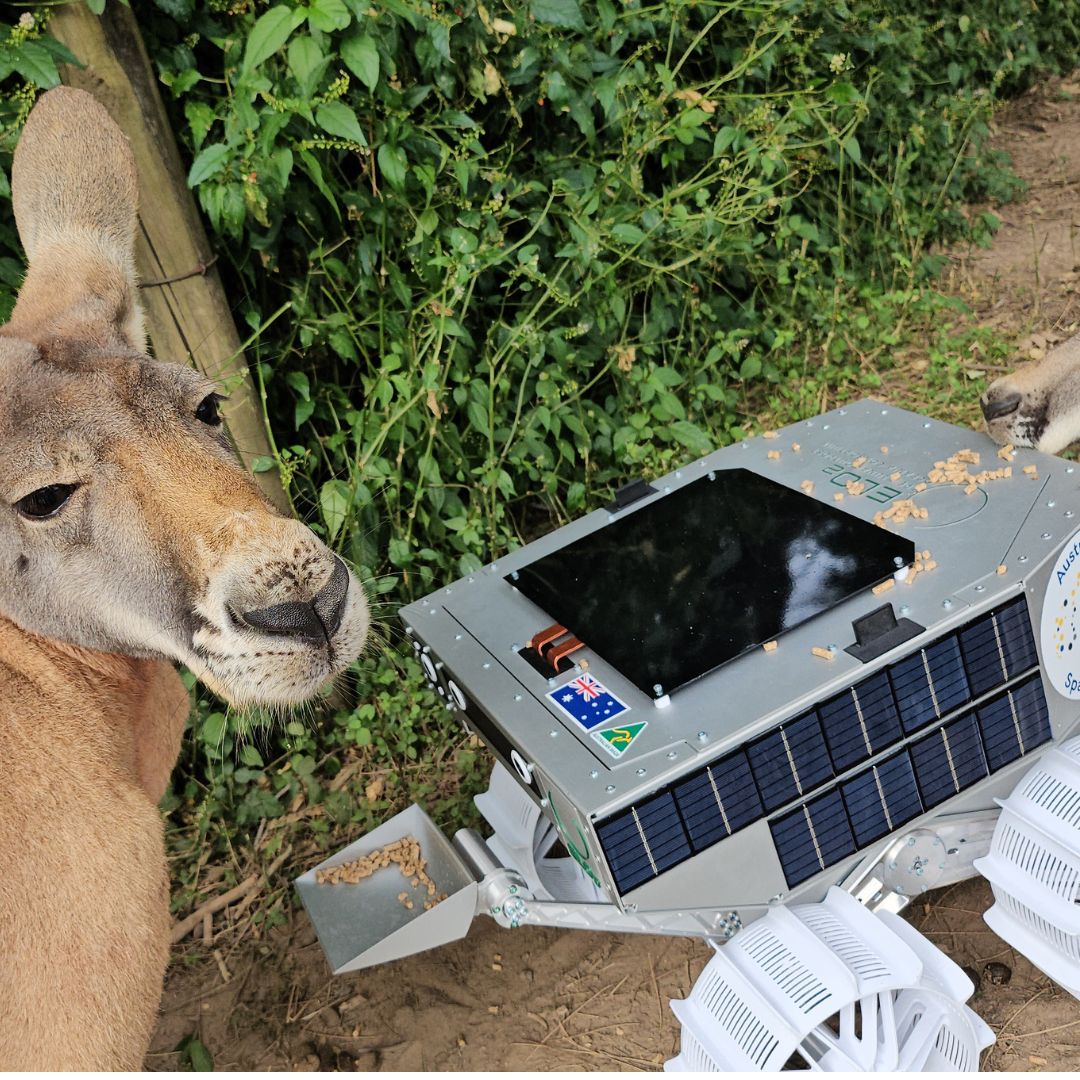
The ELO₂ Consortium—co-led by EPE Oceania and Lunar Outpost Oceania—has been selected by the Australian Space Agency to build Australia’s first lunar rover, nicknamed “Roo-ver.” This $42 million national project will harness the innovation and expertise of universities, SMEs, and industry partners from every corner of Australia to design, manufacture, and operate the rover right here at home.

ARIAM CI’s Ian Manchester, Salah Sukkarieh, Thierry Peynot, Niko Sünderhauf and Dimity Miller are all involved and will be contributing advanced robotics technologies to this mission. This milestone showcases Australian ingenuity on the global stage, sparks new jobs and research opportunities in the growing space industry, and strengthens our contribution to NASA’s Artemis Program, with “Roo-ver” set to be remotely operated on the Moon from Australia. Stay tuned as we embark on this once-in-a-lifetime mission to put an Aussie-made rover on the lunar surface and usher in a new era of national space leadership!

ARIAM Welcomes New Partner: Rijk Zwaan

We are delighted to announce a significant new partnership for the ARIAM Research Hub!

In an extensive multi-year collaboration led by Prof. Salah Sukkarieh, ARIAM will join forces with roboticists, AI experts, and plant breeders from Rijk Zwaan to revolutionize crop breeding operations. This partnership will leverage cutting-edge robotics, advanced sensing, and digital twin technologies.

Rijk Zwaan, a global leader in vegetable breeding, is a family-owned company renowned for its innovation and research excellence. With over 4,000 employees, Rijk Zwaan dedicates 30% of its annual revenue to R&D, driving global advancements in agriculture. This collaboration is a fusion of innovative research, technical expertise, and practical application. By bridging the gap between academia and industry, we aim to deliver
impactful agricultural robotic and AI solutions. Our goal is to enhance crop breeding efficiency, improve sustainability, and address future food production challenges.

We believe that Rijk Zwaan will be a fantastic addition to the ARIAM partner cohort and there are strong research synergies with current projects that we look forward to exploring further.

ARC Discovery Project linkage grant awarded to ARIAM researchers.

Congratulations to Prof. Stefan Williams, Associate Prof. Thierry Peynot and Dr. Donald Dansereau on the award of their Australian Research Council Discovery Project: Introspection for Resilient Robotic Perception in Challenging Environments.

Their project aims to enhance robotic perception in challenging environments such as murky water and extreme weather where state-of-the-art approaches fail. By developing new representations and processing architectures capable of introspection, it enables robots to recognise and adapt to their own perceptual limitations.

The expected outcomes are robotic systems with unprecedented resilience in challenging application domains like infrastructure monitoring and autonomous driving. This should bring economic benefit to Australia with broad robotic deployments in environmental monitoring and understanding of critical marine and terrestrial ecosystems, parks, and infrastructure, and improved mobility for the elderly and disabled.

ARIAM Hosts 2024 Annual Conference & Research Showcase

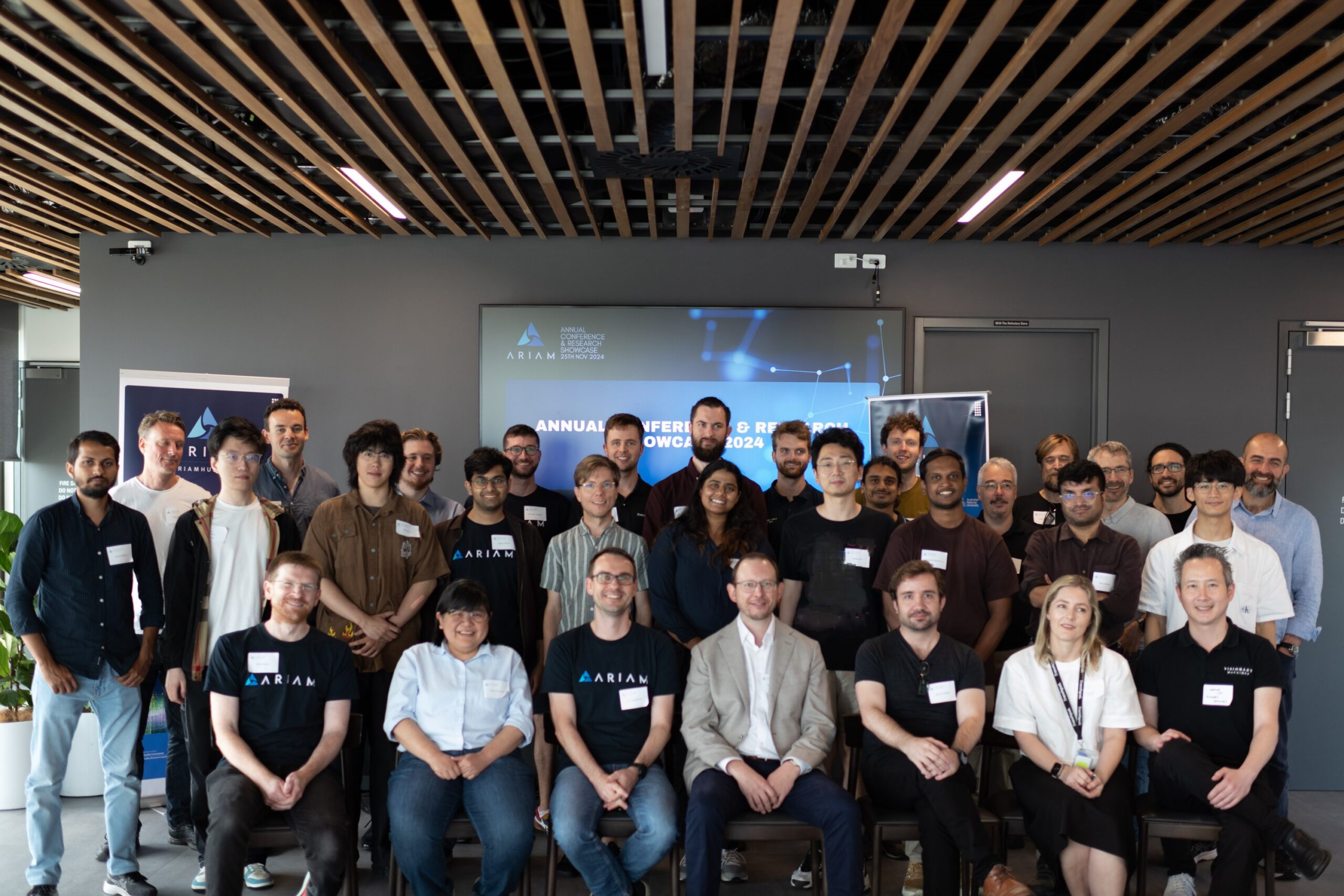
To round up the year, we hosted our first Annual Conference and Research Showcase at the University of Sydney’s Business School, on November 25th. The day was a great success and provided our research team with the opportunity to present their research projects, via lightning talks and poster presentations and discuss their opportunities as well as challenges. We hope that this event will help foster broader collaboration across the Hub.

The conference was opened by Prof. Julie Cairney, Interim DVCR at the University of Sydney and ARIAM Board Member.  A special thanks to Dr. Michael Bewley, VP of AI & Computer Vision – Nearmap, for an inspiring presentation on the evolution of AI at Nearmap. Our Director, Prof. Ian Manchester, shared key achievements and highlights for 2024, Prof. Niko Sünderhauf introduced us to exciting innovations in robotics research, and Prof. Stefan Williams facilitated a strategy session to co-design the next set of projects in our collaborative demonstrator program.

The event was a wonderful way to end an exciting year of research collaboration and to celebrate our collective achievements. We look forward to more opportunities to come together as a team, including our partners and key stakeholders, in 2025.

ARIAM’s Annual Sundowner 2024

In collaboration with the Australian Centre for Robotics (ACFR) and MySpaceMedia, we hosted our annual industry-networking sundowner event in
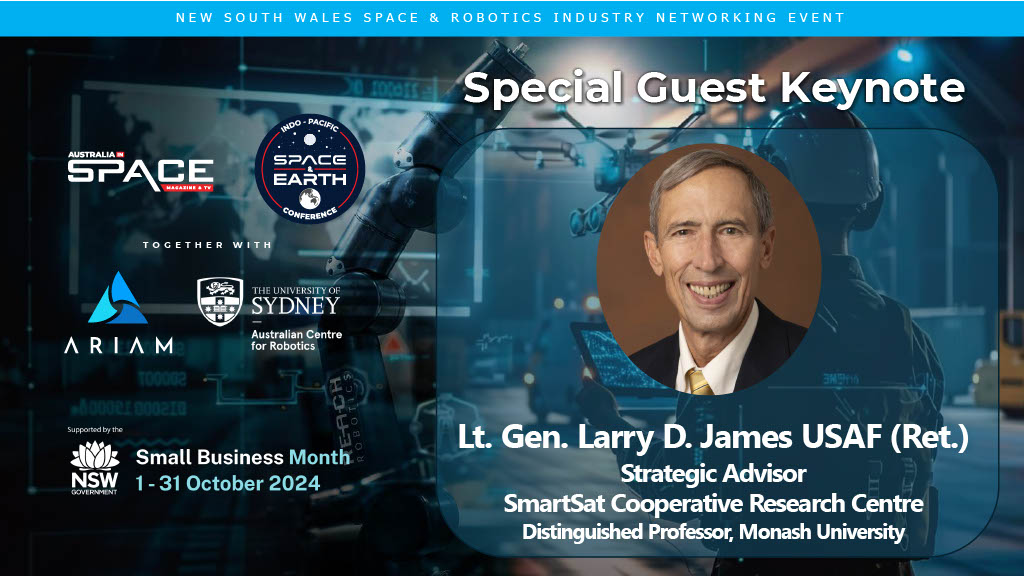
October at the ACFR Labs, University of Sydney. We were delighted to welcome Lt. Gen Larry James as our keynote speaker, and listen to guest panellists Aude Vignelles, Michal Weiss & Navinda Kottege. They were joined by our Director, Prof. Ian Manchester and Prof. Salah Sukkarieh, to discuss Cross Sector Operations and Robotics and its applications in the space, agriculture and defence sectors.

ACFR PhD students Jack Naylor and Tara Bartlett presented their respective research projects in Building New Representations, Algorithms and Sensors to Help Platforms Operate Safely and Robustly in Space (Jack) and Footstep Planning For Agile Bipedal Robots (Tara).

It was great to be joined by so many current and emerging members of the Australian robotics community.